Reading the Calendar
A guide to the puzzle history calendar and what every color tells you.
Published January 1, 2026 · Updated March 24, 2026
The Pyralinks calendar gives you a bird's-eye view of your entire puzzle history a month at a time. At a glance you can see which days you played, how you performed on each puzzle, and where you have gaps to fill in. Once you know how to read it, the calendar becomes a motivating record of your progress over time.
How Days Are Laid Out
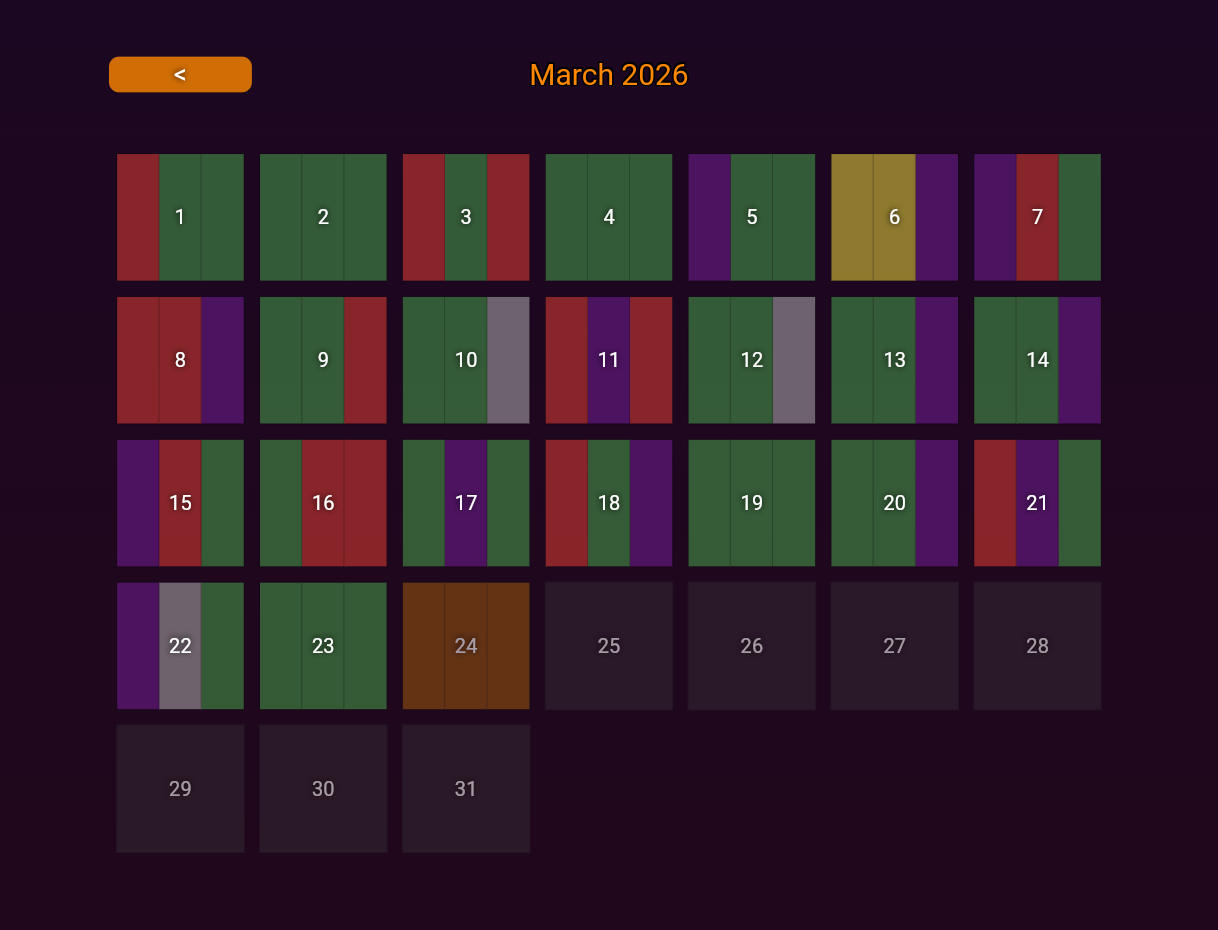
Each day appears as a square on the calendar. Inside that square are one or more colored rectangles stacked together - one rectangle per puzzle available on that day. Depending on which puzzle types are active, a day may contain two or three rectangles. Each rectangle represents exactly one puzzle on exactly one day, so a day with three rectangles means three separate puzzles were available and each has its own independent result.
What the Colors Mean
Each rectangle is colored to reflect the outcome of that particular puzzle:
| Color | Meaning |
|---|---|
| Purple | Solved on the first guess - a perfect solve |
| Green | Solved, but required more than one guess |
| Red | Played to the end but not solved - ran out of guesses |
| Yellow | Started but not finished - if today, still completable; if a past day, permanently unfinished |
| Orange | Today's puzzle, not yet started - turns yellow once you open it |
| Gray | Past puzzle that was never started |
Purple vs. Green: An Indication Of Progress
Both purple and green mean you solved the puzzle, but they capture a meaningful difference in how you got there. Purple means the arrangement was correct from the very first guess - you worked out the full solution before submitting. Green means you needed the feedback from at least one guess to finish. Over time, watching how often purple appears in your calendar is one of the best indicators of improving puzzle intuition.
Yellow: In Progress or Permanently Unfinished
Yellow means started but not finished. What happens next depends on whether it is today or a past day. Today's puzzle starts as orange, and switches to yellow the moment you open it. While the day is still active, a yellow puzzle can be completed - just go back in and finish it. Once the day ends, yellow becomes permanent: the puzzle is gone and the record stays as-is.
Gray is always permanent. It means a past puzzle was never opened at all. Both yellow and gray on past days are missed opportunities - Pyralinks does not allow replaying old puzzles. Each day is a one-time chance, and the calendar is an honest record of whether you took it.
Orange: The Puzzle You Have Now
Orange marks today's puzzles that are available but not yet started. The moment you open one, it turns yellow - you have started it and the clock is running. Finish it before the day ends and it becomes purple, green, or red depending on how you did. Leave it unfinished and it stays yellow permanently once midnight passes.
Reading Patterns in Your History
The calendar is most useful when you step back and look at it as a whole. A stretch of green and purple with no gray tells you that you have been keeping up with your daily puzzles consistently. A cluster of red squares might indicate a week where a particular puzzle type was especially difficult - or just a rough streak. Yellow and gray squares are missed opportunities - past days that can no longer be played.
Many players find that their ratio of purple to green shifts over weeks of regular play. The more familiar you become with the puzzle structure and common patterns, the more often you can lock in the full solution before your first guess.
Quick Reference
- Each square = one day; each colored bar inside = one puzzle on that day.
- Purple: Solved on the first guess.
- Green: Solved, took more than one guess.
- Red: Played to the end but not solved.
- Yellow: Started but not finished.
- Orange: Today's puzzle, not yet started.
- Gray: Past puzzle, never started.
